Case Study · Design System · UI Lead
A design system for Iberia: from strategic definition to operation.
Responsible for creating and consolidating the airline's design system, from design tokens and reusable components to the documentation that enables its adoption by design and development teams.
Role
UI Lead · Design System Specialist
Company
Iberia / TobeIT
Year
2024 — Present
platforms
Figma / Supernova / Jira
COMPLETE PROJECT
Apply in interview
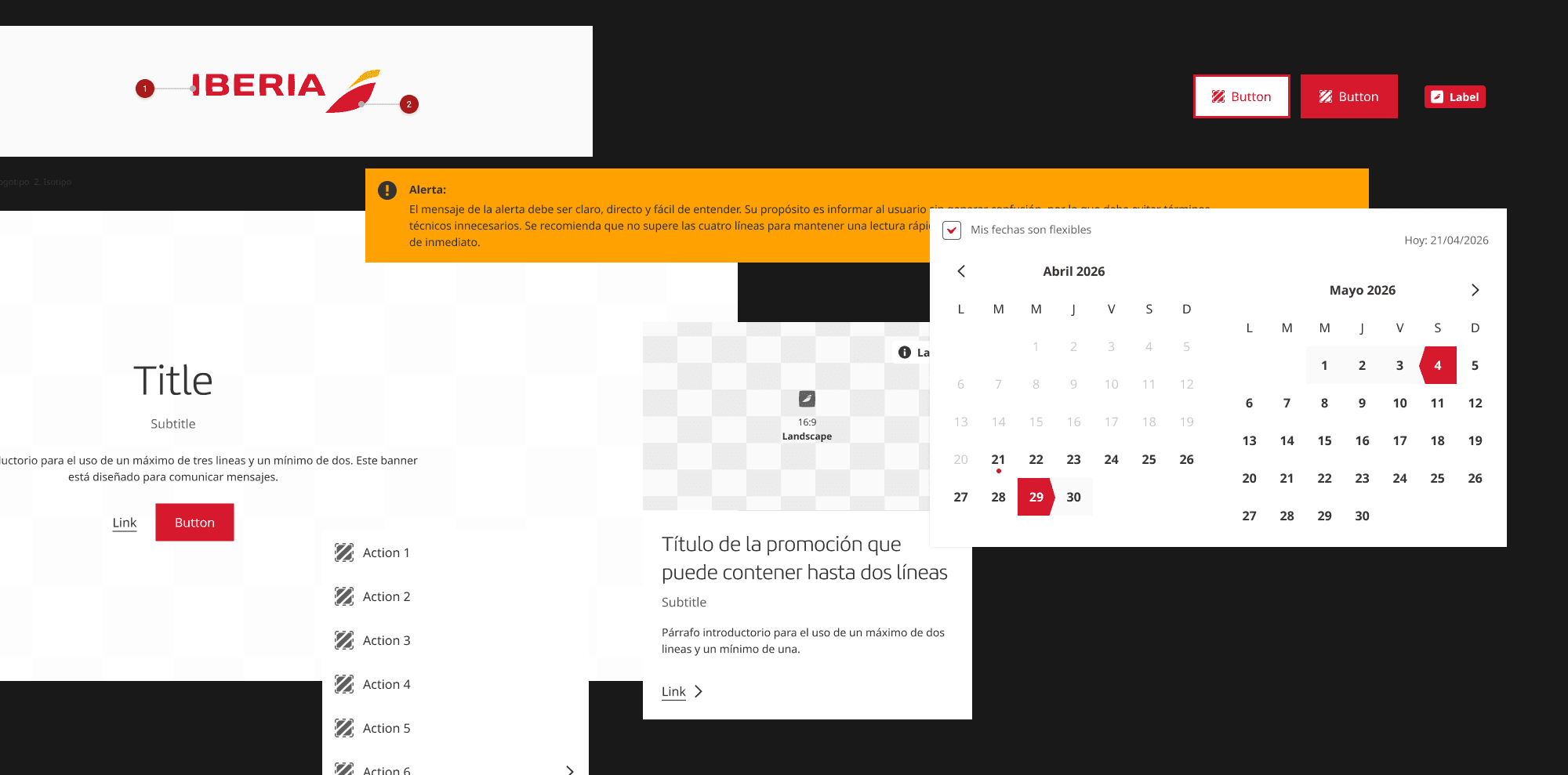
My Role
As a Design Systems Specialist and UI Lead, I led the definition and evolution of Iberia's design system. I coordinated decisions with the product and development teams, prioritized needs, designed scalable components and patterns, and supported their implementation to ensure a consistent experience across the entire digital ecosystem.
The challenge
Iberia needed a single source of truth for its digital product. Multiple teams were designing and developing without shared components or common tokens, which generated inconsistencies, rework, and slow decision-making. The system had to be scalable, adoptable, and aligned with business, technology, and the user experience on web and mobile.
01
Strategy and tokens
Strategic definition of the system and development of design tokens as a scalable foundation for the entire product.
02
Reusable components
Creation of a consistent component library, with variants and states designed for both design and development.
03
Documentation and adoption
Clear and functional documentation that facilitates adoption by teams and reduces friction.
04
Governance and coordination
Coordination of UI teams and key decisions alongside development and Product Owners, with auditing and continuous improvement.
Direction, governance, and alignment
My responsibility was not limited to building components. I worked on defining a shared direction for the system, connecting product needs, experience decisions, and technical constraints.
I organized the evolution of the Design System into prioritized workstreams, coordinating decisions with Product Owners, design, and development. Interface audits allowed for detecting inconsistencies, identifying recurring needs, and turning them into system improvements.
01
Design in Figma
Creation of components, variants, states, and properties to build a scalable and consistent library.
02
Documentation in Supernova
Organization of tokens, components, and usage guidelines to centralize documentation and facilitate its adoption by teams.
03
Deployment in progress
Collaboration with development to translate components into code, validate behaviors, and ensure consistency between the design and the final product.
How I accompanied the implementation
Each pattern and component was developed considering both its design use and its technical feasibility. Documentation, behavior criteria, and continuous collaboration with development helped reduce ambiguities and maintain quality during implementation. Although I have also gone through an early stage of auditing and design without development.
What I contributed as a lead
Direction and evolution of the system.
Prioritization of needs and components.
Coordination between design, product, and technology.
Experience and consistency audit.
Documentation and usage criteria.
Adoption monitoring and continuous improvement.
Impact
1
source of truth
A single shared system between design and development.
+
team adoption
Tokens and components integrated into the workflow.
∞
scalability
Base prepared to grow with the airline's product.